Lucerne Blue-Eyed Grass
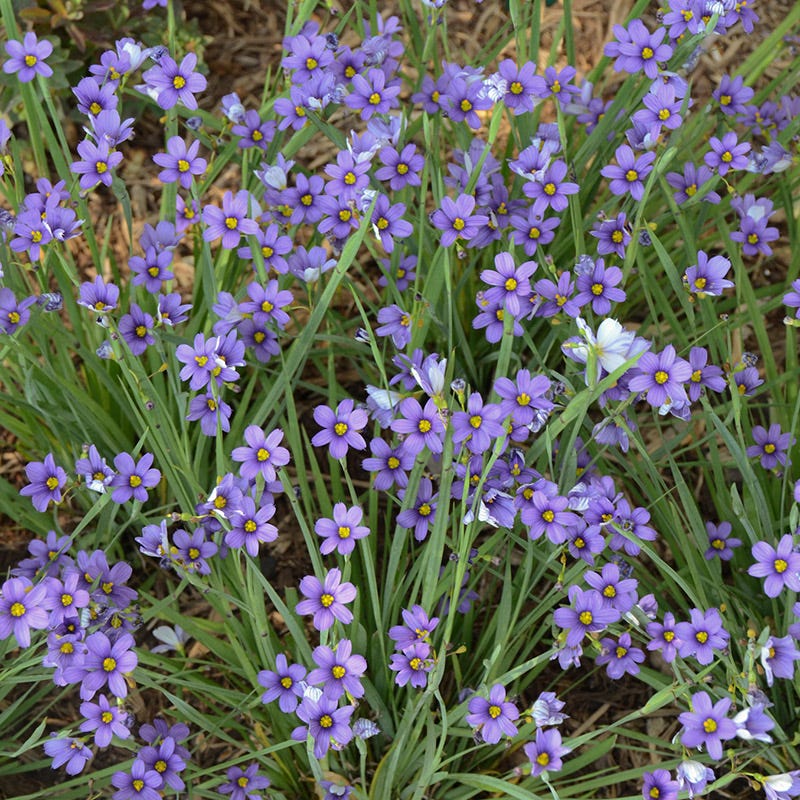
6-12" tall x 6-8" wide. The showy blooms of Lucerne Blue-Eyed Grass (Sisyrinchium angustifolium) grace gardens from May to June on the heels of spring bulbs. Despite the common name blue-eyed grass, Sisyrinchium is a relative of iris and the fine blue-green foliage is quite reminiscent of the flattened, sword-like blades of an iris, only much finer. The fast-growing foliage adds soft texture along the edges of cottage gardens and perennial borders. Excellent for stabilizing slopes and naturalizing into lawns or meadows where the foliage disappears among the grasses. Tolerant of a diversity of soil types, plants grow well in any moist, well drained soils and adapt well to rain gardens and bog plantings. Lucerne is moderately drought tolerant once established. Plants may rebloom in late summer under favorable conditions. Commonly a short-lived perennial, divide every 2-3 years to increase vigor. Avoid thick layers of mulch which can cause crown rot.
Original: $11.32
-70%$11.32
$3.40Product Information
Product Information
Shipping & Returns
Shipping & Returns
Description
6-12" tall x 6-8" wide. The showy blooms of Lucerne Blue-Eyed Grass (Sisyrinchium angustifolium) grace gardens from May to June on the heels of spring bulbs. Despite the common name blue-eyed grass, Sisyrinchium is a relative of iris and the fine blue-green foliage is quite reminiscent of the flattened, sword-like blades of an iris, only much finer. The fast-growing foliage adds soft texture along the edges of cottage gardens and perennial borders. Excellent for stabilizing slopes and naturalizing into lawns or meadows where the foliage disappears among the grasses. Tolerant of a diversity of soil types, plants grow well in any moist, well drained soils and adapt well to rain gardens and bog plantings. Lucerne is moderately drought tolerant once established. Plants may rebloom in late summer under favorable conditions. Commonly a short-lived perennial, divide every 2-3 years to increase vigor. Avoid thick layers of mulch which can cause crown rot.