Red Nerine Lily
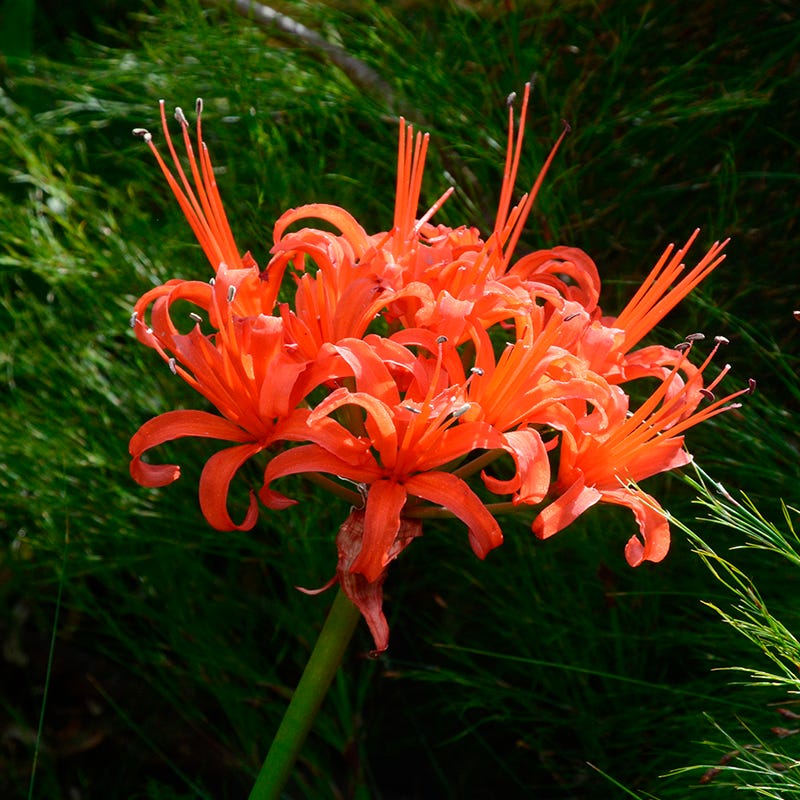
24" tall x 4" wide. The spidery blooms of Red Nerine Lily are comprised of many flowers clustered at the top of the stem, each with multiple recurved petals and long anthers. The bare, leafless flower stalk appears first and is followed by strap-like leaves. Hardy only in warmer climates, nerine lilies are best grown in the north in containers. Plant bulbs with their necks exposed above the soil line in spring, after the danger of frost has passed. Place the pot in full sun to partial shade, and water very sparingly. Much like its cousin the amaryllis, nerine lilies should be kept dry in dormancy. Water regularly only when the flowers are in bloom or when the foliage is present. As soon as frost threatens, move the pot of bulbs into the garage for the winter and stop watering. When spring arrives, move the pot back outdoors but, again, limit watering until the flower stalks emerge in the autumn. Gardeners in USDA zones 8-10 will find nerine lilies perform well in average garden soil that's well drained, especially in the spring and summer, when the bulbs are in dormancy.
Product Information
Product Information
Shipping & Returns
Shipping & Returns
Description
24" tall x 4" wide. The spidery blooms of Red Nerine Lily are comprised of many flowers clustered at the top of the stem, each with multiple recurved petals and long anthers. The bare, leafless flower stalk appears first and is followed by strap-like leaves. Hardy only in warmer climates, nerine lilies are best grown in the north in containers. Plant bulbs with their necks exposed above the soil line in spring, after the danger of frost has passed. Place the pot in full sun to partial shade, and water very sparingly. Much like its cousin the amaryllis, nerine lilies should be kept dry in dormancy. Water regularly only when the flowers are in bloom or when the foliage is present. As soon as frost threatens, move the pot of bulbs into the garage for the winter and stop watering. When spring arrives, move the pot back outdoors but, again, limit watering until the flower stalks emerge in the autumn. Gardeners in USDA zones 8-10 will find nerine lilies perform well in average garden soil that's well drained, especially in the spring and summer, when the bulbs are in dormancy.